

Table Of Contents
Redux Toolkit (RTK) is the official, recommended way to write Redux logic. It keeps Redux’s core ideas while removing unnecessary boilerplate and enforcing best practices.
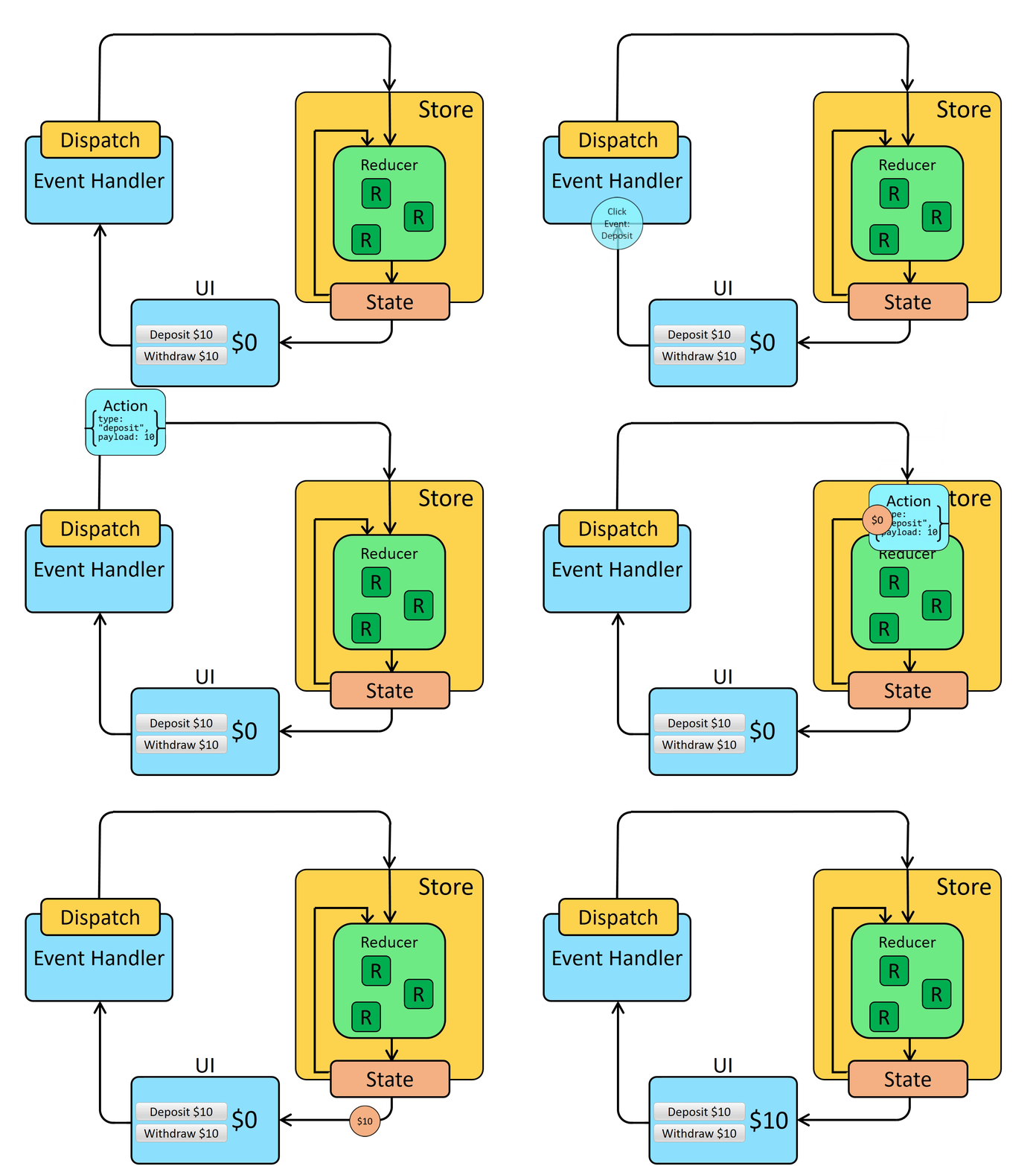
Core Concepts
Flow: UI → Action → Reducer → Store → UI
1. Define a slice
const counterSlice = createSlice({name: "counter",initialState: { value: 0 },reducers: {increment(state) {state.value++;},},});
RTK auto-creates:
- Action types →
"counter/increment" - Action creators →
increment()
2. Configure the store
const store = configureStore({reducer: { counter: counterSlice.reducer },});
RTK:
- Combines reducers
- Adds default middleware
- Enables DevTools
3. UI dispatches actions
dispatch(counterSlice.actions.increment());
4. Reducer updates state (via Immer)
state.value++; // looks mutable, stays immutable
5. Store saves new state → UI re-renders
Components subscribed with useSelector get updated automatically.
Handle Async Logic
Dispatch thunk → pending → (API call) → fulfilled OR rejected → state update → UI re-render
// dispatch(fetchData());const slice = createSlice({name: "data",initialState: { data: null, loading: false, error: null },reducers: {},extraReducers: (builder) => {builder.addCase(fetchData.pending, (state) => {state.loading = true;state.error = null;}).addCase(fetchData.fulfilled, (state, action) => {state.loading = false;state.data = action.payload;}).addCase(fetchData.rejected, (state, action) => {state.loading = false;state.error = action.error.message || "Failed to fetch";});},});
RTK auto-dispatches:
data/fetch/pendingdata/fetch/fulfilleddata/fetch/rejected
Handled in slice extraReducers.
Redux-Saga
Redux-Saga is a Redux middleware for handling complex async side effects like API calls, delays, retries, concurrency, and cancellation.
It uses generator functions (function*) to:
- Pause/resume with
yield - Write async logic in a sync-looking way
- Control concurrency, cancellation, sequencing
Core Effects
call(fn, ...args)
- Runs a function (e.g., API call)
- Blocking: waits for result
put(action)
- Dispatches a Redux action
takeEvery
- Runs saga for every action
- No cancellation
takeLatest
- Runs only the latest
- Cancels previous
takeLeading
- Runs only the first
- Ignores others until done
Parallel Effects
yield all([call(fetchUser),call(fetchPosts),call(fetchComments),])
Runs effects concurrently.
Redux-Saga Example
// sagas.tsfunction* fetchPokemonAllWorker(): SagaIterator {try {const list: { id: number; name: string }[] =yield call(api.fetchPokemonListApi)const fullList: PokemonFull[] = yield all(list.map(p => call(fetchPokemonFullWorker, p)))yield put(fetchPokemonAllSuccess(fullList))} catch (e) {yield put(fetchPokemonAllFailure('Failed to load Pokémon'))}}function* fetchPokemonFullWorker(pokemon: { id: number; name: string }): SagaIterator<PokemonFull> {const detail: any = yield call(api.fetchPokemonDetail, pokemon.name)const [species, types, abilities]: [any, any[], any[]] = yield all([call(api.fetchByUrl, detail.species.url),all(detail.types.map((t: any) => call(api.fetchByUrl, t.type.url))),all(detail.abilities.map((a: any) =>call(api.fetchByUrl, a.ability.url))),])return {id: detail.id,name: detail.name,detail,species,types,abilities,}}export default function* pokemonSaga(): SagaIterator {yield takeLatest(fetchPokemonAll.type, fetchPokemonAllWorker)}