

Table Of Contents
Micro Frontends split a large frontend into independently developed and deployed apps. Combined with Vite and Module Federation, this approach enables fast builds, team autonomy, and scalable frontend architecture.
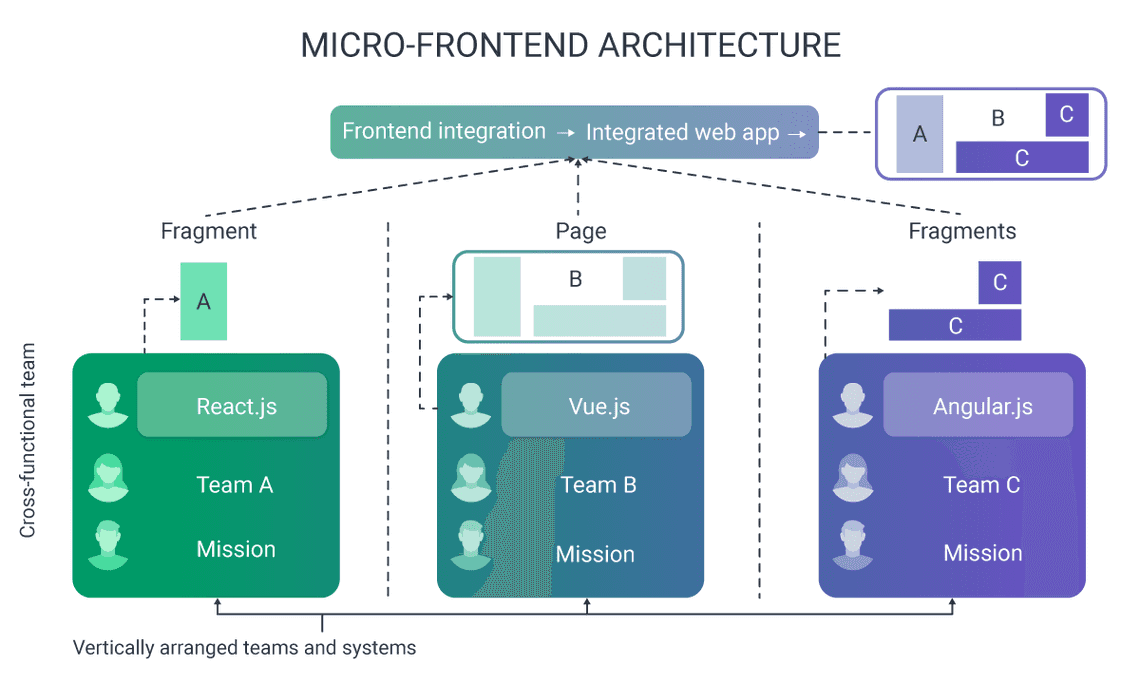
What is a Micro Frontend?
A Micro Frontend is an architectural pattern where each UI domain is built, tested, and deployed separately, then composed at runtime by a host application. This helps teams:
- Move faster
- Reduce coupling
- Scale independently
Module Federation (in short)
Module Federation allows one app to dynamically load modules from another app at runtime, while sharing dependencies like React to avoid duplication.
With Vite, this is enabled via:
@originjs/vite-plugin-federation
Why Vite?
- ⚡ Extremely fast dev server
- 🧩 Simple configuration
- 🚀 Ideal for micro-frontend workflows
- 🛠 Works well with modern React setups
Architecture Overview
- Host App: Main container users interact with
- Remote App: Exposes reusable components (micro frontend)
Host App└── loads → Remote Components (via remoteEntry.js)
Implementation Steps (High Level)
1. Create Apps
npm create vite@latest host-app -- --template reactnpm create vite@latest todo-components -- --template reactnpm install
2. Build Remote Components
Expose reusable UI from the remote app:
Input.jsxList.jsx
3. Add Module Federation (Remote)
federation({name: "todo-components",filename: "remoteEntry.js",exposes: {"./List": "./src/components/List.jsx","./Input": "./src/components/Input.jsx",},shared: ["react"],})
Build and serve:
npm run buildnpm run preview
4. Add Module Federation (Host)
federation({name: "host-app",remotes: {todo_components: "http://localhost:4173/assets/remoteEntry.js",},shared: ["react"],})
5. Use Remote Components
import Input from "todo_components/Input";import List from "todo_components/List";
Remote components now behave like local imports.